
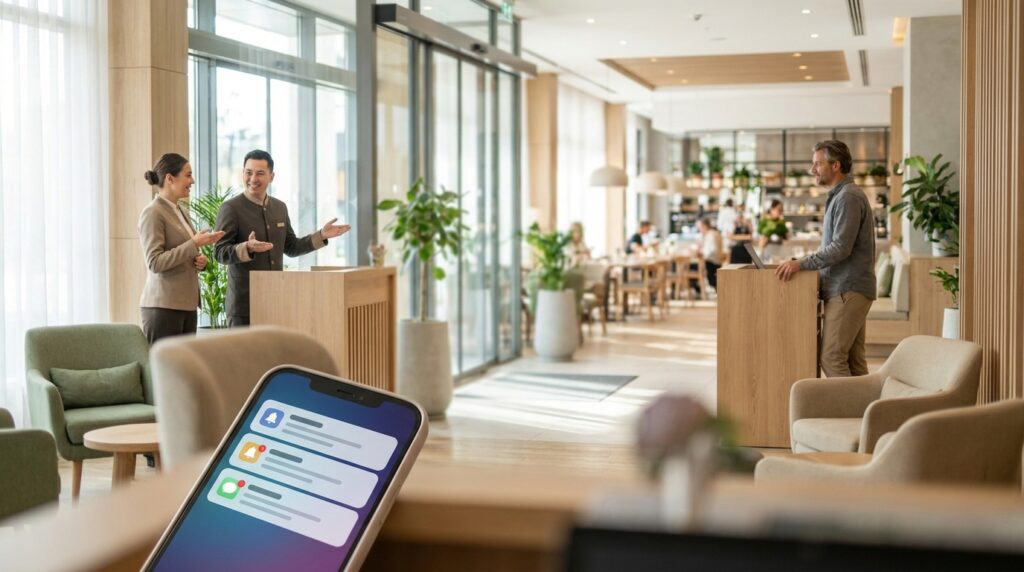
Late bookings, sudden changes, and last‑minute questions are normal in hospitality (everyone has seen it). Guests want answers right away. By 2026, that expectation is even stronger. Email often falls behind. Social feeds are noisy and easy to miss. Most apps barely get opened. That’s why SMS marketing for hospitality keeps growing across Ireland and the EU, it matches how guests already act.
Text messages arrive where attention already is: on the phone, with no logins or downloads. Most get read within minutes. For hotels and restaurants, this can cut no‑shows and improve table use without extra hassle. When done right, restaurant text marketing feels like a helpful reminder, not a sales message. It shows up at the right moment, which clearly helps the guest experience.
This guide explains how hospitality messaging solutions work today and why they perform so reliably. It shows how SMEs can use them and stay within GDPR rules. You’ll find real data, simple workflows, and practical examples for hotels, cafés, pubs, and restaurants. Automation, two‑way messaging, and the 2026 trends that matter are covered. Tools like Sendmode support this, but the focus stays on strategy, not software.

Why SMS Works So Well for Hotels and Restaurants
Most hospitality messages come with a clock attached: booking reminders, table‑ready alerts, last‑minute check‑in updates. SMS arrives right when those moments matter, often just before a guest needs to act. That timing makes it more helpful than email, without waiting on someone to check an inbox at the right time.
Across Europe, the gap in results is easy to see. SMS open and reply rates beat email by a wide margin. That shows up in everyday work, changing how teams handle bookings and guest messages without adding new tools or extra steps.
|
Metric
|
Typical Performance
|
|---|---|
| SMS open rate | 90, 98% |
| SMS click-through rate | 18, 36% |
| SMS response rate | Around 45% |
| Average hospitality conversion rate | About 9% |
These results help explain why 68% of EU businesses now use SMS for transactional or support messages like reminders and confirmations (MessageFlow). Guests trust these messages because they’re short, clear, and useful right away. With clear consent and expectations, that trust often carries over to promotions.
Restaurants use texts to cut no‑shows and bring people in on slower weekdays. Hotels use SMS to push direct bookings and keep guests informed before arrival, which boosts satisfaction early on. Familiar, quick, and easy to act on.
Most hospitality teams start with SMS early, and it makes sense. You see clear results fast, without fancy campaigns or extra effort at all.
Booking and Reservation Reminders
No-shows drop when a reminder goes out 24 hours before arrival or dinner. SMEs often see results in the first week, with no extra effort, because the message sounds like helpful service. For guests, it feels friendly, not like marketing or a sales push.
Real-Time Updates
Plans change, and SMS deals with fast updates easily. It works well for short notes, late check-ins, or telling you a table is ready early.
Promotions That Match the Moment
Local, timely messages get results with text marketing. Think midweek lunch deals or same-day table openings. Hotels use SMS for last-minute upgrades and open spa slots, so you can grab them quickly.
Two-Way Guest Communication
Guests expect real-time, two-way mobile communication, says Ted Horner from SiteMinder. Email alone doesn’t meet that need (SiteMinder). Two-way messaging lets guests reply with simple questions, keeps things fast and easy, and reduces calls so staff can focus on service.
Timing, Frequency, and Local Behaviour Matter
SMEs often slip up by sending messages at the wrong time. SMS works because it feels personal, which means timing mistakes show up fast. Buzz someone’s phone during dinner or late evening, and opt-outs rise quickly. One small slip can undo a solid offer.
Preferences also change across Europe, which matters for Irish businesses serving EU travellers. Habits and expectations vary by place, and treating every audience the same slowly drains attention.
Send times are a classic example: in Poland and Central-Eastern Europe, the 10:00, 12:00 and 17:00, 19:00 windows work almost universally. In DACH countries and Scandinavia, recipients clearly prefer morning communication, and frequency tolerance is significantly lower. Every extra message beyond the optimum produces a measurable rise in unsubscribes.
For hospitality messaging solutions, this shows up in real ways. Hotels with international guests do better when they move past one-size-fits-all campaigns. Restaurants focused on locals can test different send times and watch opt-out rates. Clear patterns start to show.
Common mistakes to avoid include:
- Sending promotions late at night
- Messaging too often in short bursts
Automation and AI-Driven SMS Workflows
A common hotel setup shows how much things have changed: a booking confirmation sends right away, a reminder goes out 24 hours before arrival, a welcome message arrives on check‑in day, and a review request follows after checkout. By 2026, this setup feels normal. Manual SMS sending has mostly disappeared, mainly because automation saves time and cuts down on small but frustrating errors.
For hospitality SMEs, the focus stays on tools that are easy to live with. There’s no heavy setup and no need to watch them every day. Once the rules are in place, messages send on their own, which takes pressure off the team.
Most automated texts connect to clear triggers:
- when a booking is confirmed
- as an appointment gets closer
- after a guest checks out
- if a table gets cancelled
These workflows run quietly in the background, so staff don’t have to track who needs what and when. According to Voyage Travel Marketing, AI now helps improve send times and message wording based on guest behavior (Voyage Travel Marketing). Restaurants use similar flows for reservations and loyalty offers. Simple, and it works.
GDPR Compliance Is a Strength for SMEs
Across Ireland and the EU, many SMEs hold back on SMS because GDPR feels risky, and that worry often stops messaging altogether. That reaction makes sense. But when consent is handled the right way, GDPR often leads to better results and keeps messages useful instead of annoying.
The rules are clear. Explicit opt‑in is required, with no guessing allowed. Customers also need a plain explanation of what they’ll get. Service updates should stay separate from marketing, and opting out should be easy, one tap, not a long process.
This clarity usually leads to smaller lists, but they work better. People who opt in actually want to hear from you. Research from Sakari, a well‑known source for SMS benchmarks, shows opt‑out rates usually fall between 0, 3.5% per campaign when consent is respected (Sakari).
For hospitality messaging solutions, this puts the focus on message quality. Transactional updates, like daily confirmations, quietly build trust. Over time, that trust helps promotional messages land better and feel expected, not intrusive.
New Trends Shaping SMS in Hospitality
SMS keeps changing, with a few trends shaping restaurant texts and hotel messages through 2026, leading to clear changes.
Rich Communication Services (RCS)
Early campaigns in Europe show engagement rates hitting 50% in some cases (Zeta Global). RCS sends short, visual messages with branded images and buttons. Adoption keeps growing, and results are clearer as bigger venues grow over time.
Keeping about 95.8% of revenue is why hotels push direct bookings, compared with roughly 82% through OTAs (Punch Hospitality). To reduce OTA reliance, hotels use SMS, sending quick reminders and offers through short, fast texts.
Mobile Wallet Vouchers
SMS links to mobile wallet passes are still popular since they’re fast. No apps needed, so offers are saved and used later.
Frequently Asked Questions
Your FAQs (it’s) answered
Is SMS marketing for hospitality still effective in 2026?
Yes.
For urgent hospitality updates, SMS still gets the most attention. Open and reply rates beat email by a wide margin, especially for reminders and service alerts, messages arrive fast and are seen.
How often should restaurants send marketing texts?
Restaurants usually get the best results by sending one to four promo messages a month (the sweet spot). Transactional texts, like confirmations, don’t count toward that total.
Yes. Most messaging tools manage automation easily. Simple reminders and updates work well, letting teams skip complicated systems.
Is restaurant text marketing GDPR-compliant?
Clear opt-ins and messages that match the purpose you say make it compliant (no tricks). GDPR also improves list quality without limiting results, so outreach still works (you reach people).
Should SMS replace email for hospitality businesses?
No. SMS works best alongside email. Texts suit urgent, high‑value moments like last‑minute updates, while email covers longer messages you send usually.
Putting SMS Into Practice in 2026
Guests in hospitality expect quick, clear messages, and they notice which hotels and restaurants deliver them well. SMS marketing is no longer optional, and hotels and restaurants that meet this level often stand out.
Good texts make the difference. Respect shows in timing and relevance. Many teams start with reminders and promotions, then move into automation and two-way messaging. You may notice opt-outs give feedback, so timing can change. Consent still matters and can’t be skipped.
For Irish and EU SMEs, compliant hospitality messaging solutions support growth without added complexity. Used with care, restaurant text marketing improves service and also boosts revenue, including with simple reminders.